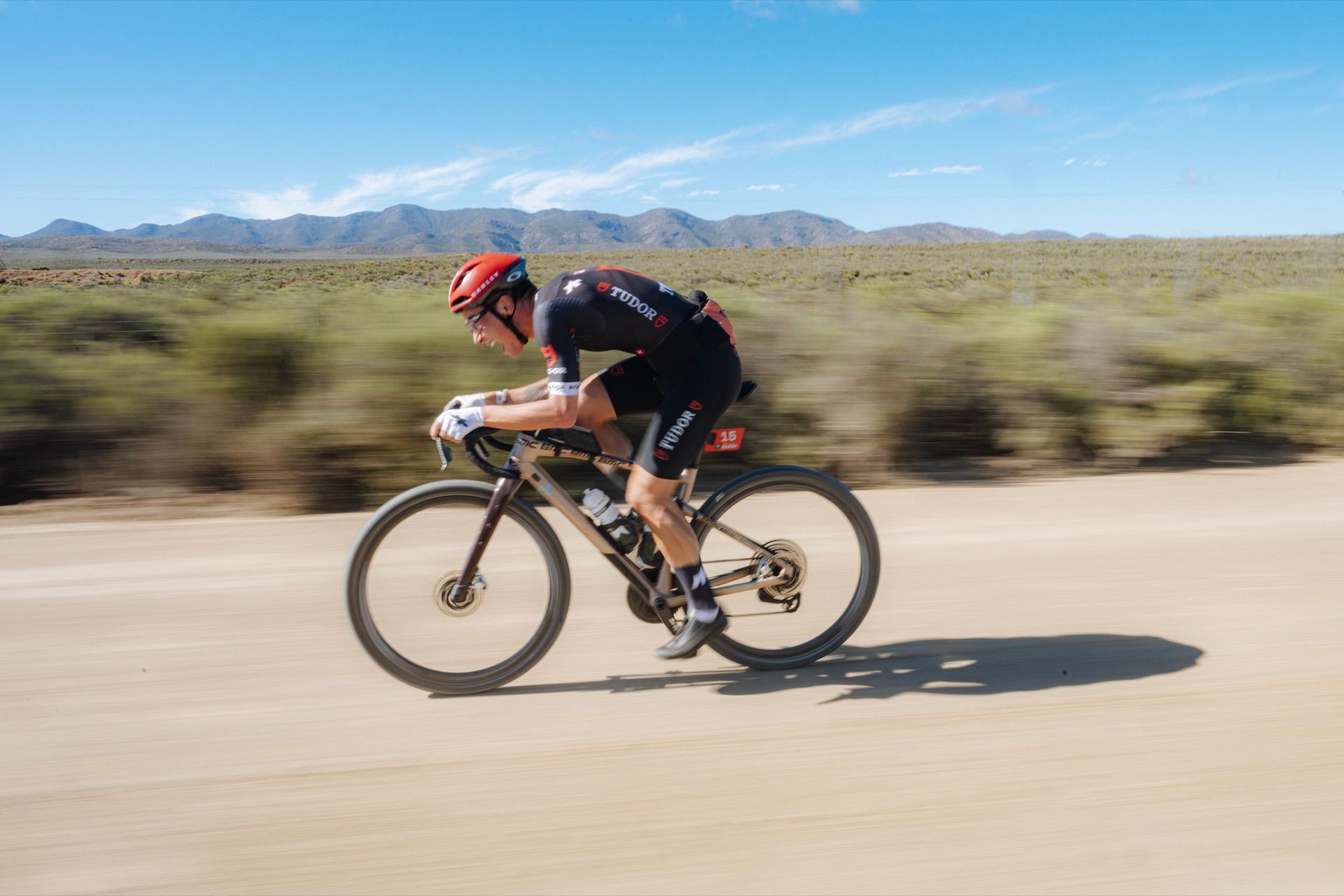
What the first edition taught us about the bike that works best here.
- Frame
- A light, compliant frame will carry you through 700 km without too much punishment. Gravel suspension insulates you better from road buzz and is worth considering. Riders who converted full-suspension mountain bikes to drop bars found the weight and efficiency trade-off wasn’t worth it.
- Tyres
- Go tubeless with plenty of sealant and rim inserts. Fit the widest tyre your frame takes: 45C is the absolute minimum we recommend, but why not follow the trend and go wider? After all, this is African gravel.
- Bars
- Narrow, flared drop bars give an aero position on the hoods and control on descents. Consider double tape or gel inserts.
- Shoes and pedals
- Use MTB shoes and pedals. The route has river crossings and rough sections where road setups struggled in 2025. A stiff-soled gravel shoe keeps pedalling efficient.
- Gearing
- 1x for simplicity or 2x for closer ratios; either works. Make sure you have a long gear for fast sections and a bail-out gear for steep climbs late in the week.
- Bottle cages
- Corrugations happen. Test cages, add gripper tape or elastic bands, and test again.
- Lube
- Conditions are usually dry and dusty, but it can rain. Pack options and apply regularly.
- Clothing
- Pack for everything: bib shorts, jerseys, gilet, long-sleeve jacket, base layers, gloves and eyewear. Laundry packages are available and there are wash lines in camp, so you don’t need seven full kits.
- Hydration
- Ride with two bottles and refill both at every Padstal. A hydration pack is worth considering; the Karoo heats up during the day.
- Inflation
- Carry at least two CO₂ canisters, a good tyre plug kit with spare plugs, and a charged electric pocket pump.